Over decades of sitting in client meetings and speaking to businesses, questions about how to manage a corporate hospitality budget have often come up.
In my experience, the biggest opportunity in hospitality is not increasing spend, but making that spend work harder.
I have seen first-hand how the most successful businesses use corporate hospitality. Not as a perk or simply as a gesture. They use it as a deliberate tool to build relationships, strengthen trust, and move commercial conversations forward. That should not come as a surprise, research from Deloitte shows that companies prioritising customer experience generate up to 60% higher profits than their competitors.
And yet, despite this, I too often see hospitality budgets fall short of their potential. Not because too much is being spent, but because it is being spent in the wrong way.
Managing a hospitality budget well is not just about control or cost management. It is about intent, alignment, and understanding how the day feels for the people you are hosting. So here are some of our essential tips built from our years of experience that can help you manage your hospitality budget more effectively.

Tips For Managing Your Hospitality Budget
The most effective budgets are not built around cost categories, instead they are built around outcomes.
Start with clarity, not cost
- Before anything is booked, be clear on what the experience needs to achieve.
- Is this about opening doors, strengthening relationships, or rewarding loyalty?
- We have learnt that when the objective is vague, the experience usually is too. And that is when spend becomes difficult to justify.
Prioritise how guests will feel
It is easy to focus on budget line items such as tickets, catering, or transport. But guests rarely remember those in isolation. They remember how enjoyable the day felt and whether they felt looked after, as well as the quality of conversation and space for connections to form. This is where budget should be weighted. Not just towards the event itself, but towards the flow and comfort around it.
Relationships outperform negotiation
Negotiating with suppliers matters, but long-term relationships matter more. Access, flexibility, and added value often come from working with the right partners over time, not simply chasing the lowest cost.
Track what matters, not just what is spent
Tracking spend is essential, but it is only half the picture. The more important question is whether the experience delivered the right audience, the right engagement and the right outcome. A cheaper event that fails to connect is always more expensive in the long run.
Evaluate impact, not just ROI
ROI in hospitality is rarely immediate.
Instead, look at:
- Relationship progression
- Follow-up conversations
- Client sentiment
These are often the leading indicators of commercial return.

Success Depends On Getting to Know Your Clients’ Better
Understanding your clients’ preferences is where good hospitality becomes genuinely effective.
On paper, it sounds straightforward. In reality, this is where most corporate events either land well or quietly miss the mark. I too often see businesses rely on assumptions rather than insight, and that is usually where engagement starts to drop off. And that is often where value slips away. Not through lack of effort, but through a small disconnect that changes the entire experience.
Here are some practical ways to build a clearer, more accurate picture of what your clients will actually value.
1. The most valuable insight often comes from simply asking.
Open, honest conversations can reveal far more than any data point. Not just what clients enjoy, but how they like to spend their time and who they prefer to spend it with. Some will tell you they love big events, but what they really value is time to talk. Others are there for the atmosphere.
Understanding that difference is where better decisions start.
2. Feedback is often underused, or collected and then forgotten.
A short, well-timed follow-up survey or feedback form after an event can give you a clear view of what worked and what did not. Not just the event itself, but the pacing, the hosting, and the overall feel of the day.
We have learnt that small details mentioned in feedback often point to the biggest improvements.
3. There is a lot you can learn simply by paying attention online.
What events are your clients attending in their own time? What do they share, comment on, or engage with on social media or elsewhere online? These signals are often more honest than direct answers, and they can help you avoid making assumptions based on job title or industry alone.
4. Offering personal choice or invitation can be incredibly powerful.
Offering a small number of well-considered options not only increases the likelihood of attendance, it shows intent. It demonstrates that you have thought about what might suit them, rather than sending a blanket invitation.
It also gives you valuable insight into what they choose, which is often more telling than what they say.
5. Your strongest insights are often already there in the client history.
Looking back at previous events, how clients engaged, what they responded to, and what they talked about afterwards can be incredibly useful.
But it is important to use this as a guide, not a template. Repeating the same experience may feel safe, but refining it based on what you have learnt is where real value is created.

Tip For Managing Last-Minute Cancellations
Cancellations are an inevitable part of corporate hospitality. In our extensive experience, we know that handling drop outs from clients who have been invited for free can certainly be challenging. They are not just a logistical inconvenience. They are often a reflection of how well the experience fits the client in the first place.
Handled well, they do not damage the relationship. In some cases, they can even strengthen it.
1. Stay Calm and Professional
First reactions matter more than we think. Responding with understanding rather than frustration keeps the relationship intact. Clients remember how situations are handled, especially when plans change.
A calm, professional response reinforces trust.
2. Offer Alternatives
A cancelled event does not have to be a lost opportunity. Offering a different date, a more suitable experience, or even a smaller, more tailored alternative shows flexibility and intent.
It shifts the focus from the missed moment to the ongoing relationship.
3. Fill the Spot
Empty seats are one of the simplest ways hospitality budgets lose value. Having a considered approach, whether that is a waitlist, another client, or even internal guests, ensures that opportunities are not wasted.
The key is being prepared, rather than reactive.
4. Learn and Improve
Patterns in cancellations are rarely random. Ask for feedback from clients who cancel to understand their reasons. This can provide insights into how you can improve your services. Adjust Invitations: Use the feedback to refine your invitation process and better match clients’ availability and interests. If the same issues appear repeatedly, timing, relevance, or clarity of invitation, they are worth paying attention to. This is where hospitality becomes smarter over time.
Each cancellation, handled properly, becomes insight for better decisions moving forward.
Top Events to Consider For Superior Hosting
Not all events create the same value.
The right choice depends less on profile and more on how well the environment supports the kind of interaction you want to have. I am a firm believer that the best events are those that make conversation feel natural, not forced.
1. Sports Events need careful curation to maximise value
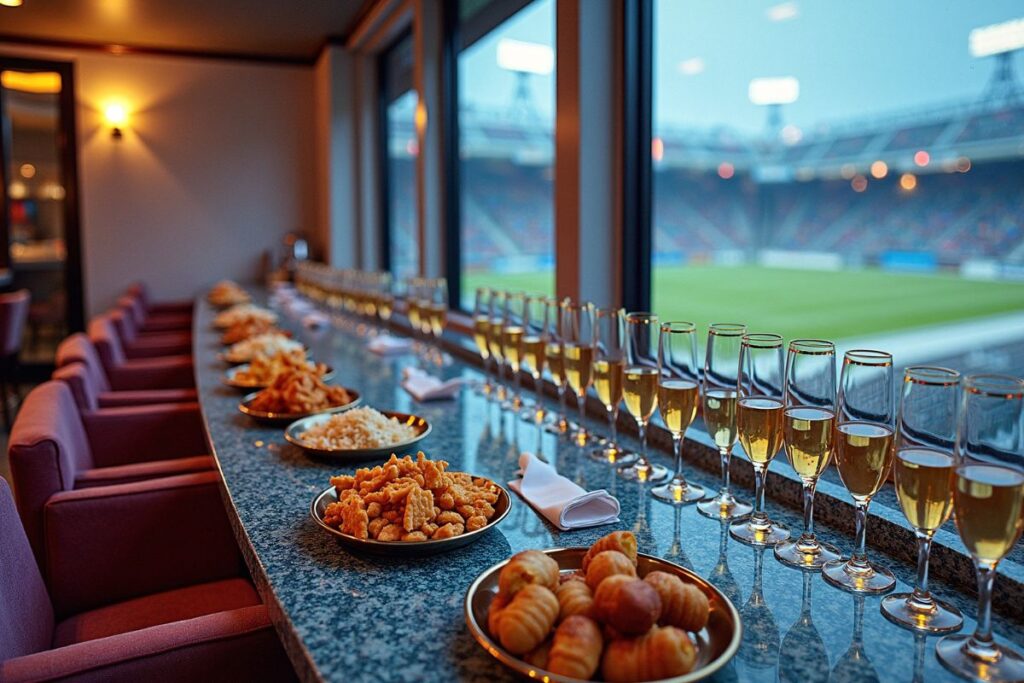
Major sporting events such as the Premier League, The Championships, Wimbledon, or the Six Nations Championship remain some of the most reliable choices in corporate hospitality. They work particularly well because the structure is already there. There is a shared focus, natural talking points, and a sense of occasion. That said, the real value comes from what sits around the match.
A curated arrival, the comfort of space to talk, and the pacing of the day are what turn a ticket into a relationship-building opportunity.
2. Music Concerts and Festivals can be great for rewards
Events like a Taylor Swift concert or festivals such as Glastonbury Festival can create strong emotional impact. They are memorable, high-energy, and often highly sought after. However, they are not always ideal for hosting. Once the performance starts, conversation becomes secondary. These events work best when the goal is to reward or impress, rather than build deeper connections.
3. Cultural Events offer a different pace and atmosphere
Experiences such as the Edinburgh Festival Fringe, Chelsea Flower Show, or the Glyndebourne Festival Opera offer a different pace. They tend to attract clients who value atmosphere, detail, and a more considered experience. From a hosting perspective, they often provide a better balance. There is enough happening to create interest, but also enough space to hold meaningful conversation without competing with the event itself.
4. Smaller Niche Events can lead to stronger engagement
This is where hospitality often becomes more effective. Smaller, more focused experiences such as private dining, wine tastings, or behind-the-scenes access naturally create better conditions for conversation. There is less distraction, more comfort, and a greater sense that the experience has been chosen with intent. We have seen time and again that these environments lead to stronger engagement and more memorable interactions.
5. Client-Centric Custom Events offer a valuable layer of personalisation
The most impactful experiences are rarely off-the-shelf. Designing something specifically around your client, whether that is a private golf day, a chef-led dining experience, or access aligned to their professional interests, signals genuine understanding. It moves the experience from hospitality to relationship-building. And that is ultimately the shift that makes the investment worthwhile.
At Experience First, we understand first hand
From the nuances of managing a hospitality budget to the importance of selecting the right events that align with your clients’ preferences, our expertise in corporate hospitality allows us to offer tailored solutions that meet your specific needs.
We take the time to get to know you and your clients, ensuring that every event we plan is a perfect fit. From major sporting events and exclusive concerts to cultural festivals and niche experiences, we provide a diverse range of options that cater to all tastes and interests. By partnering with us, you can rest assured that your hospitality budget is in capable hands. We handle all the details, from negotiating with vendors to tracking expenses, so you can focus on what matters most, building and maintaining strong client relationships. Let us help you create memorable experiences that will leave a lasting impression on your clients and drive your business success.
Contact us at Experience First to manage your corporate hospitality needs, and experience the difference that professional, personalised service can make.
By Andrew Sidebotham, Founder of Experience First with 20 years delivering premium hospitality across iconic UK & Global venues
Let us make your life easy
Contact us and begin the journey to help manage your clients experiences